PandaCodeGen / Field notes
Good questions.
Worth a read.
Welcome to our notebook. Explore guides, comparisons and lessons from building websites, online stores and the systems behind them. Pick a topic, or see what catches your eye.
Browse topics / WordPress
Read the WordPress topic overview →
WordPress
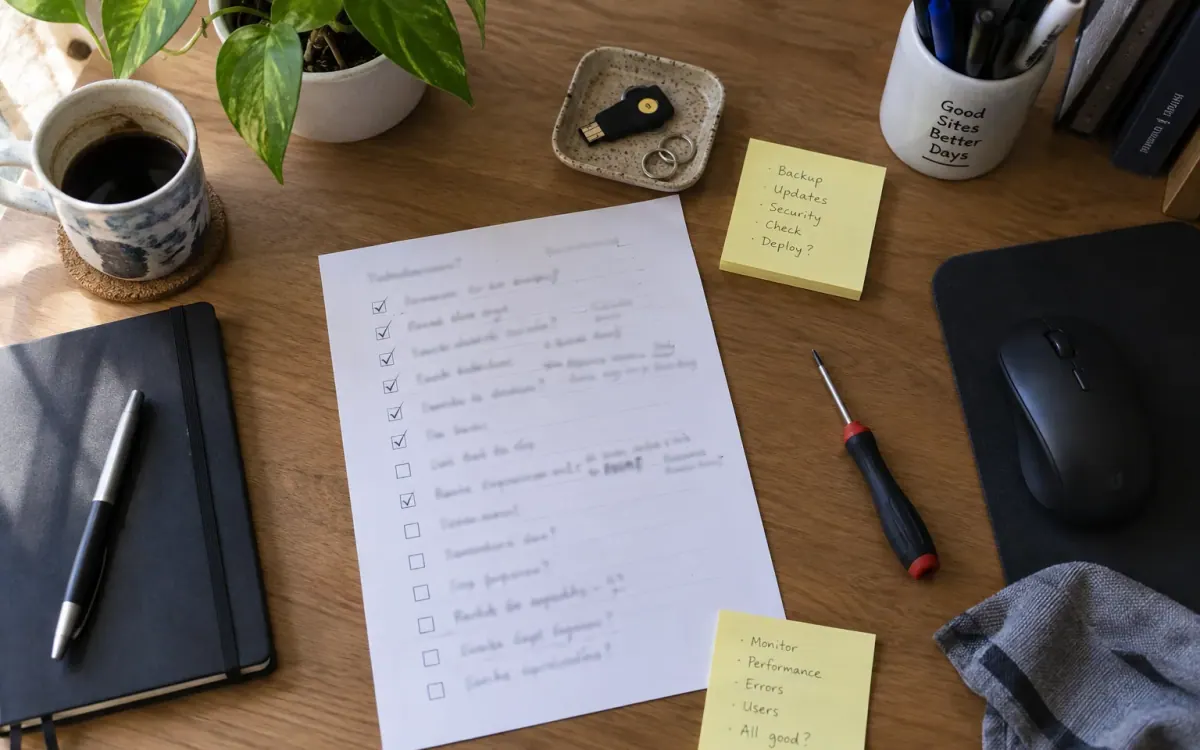
WordPress Plugin Security in 2026: Checks, Patching & Recovery
Compare WordPress plugin and Next.js security incidents: affected-version checks, timely updates, account protection and recovery planning for website owners.
Read the guide ↗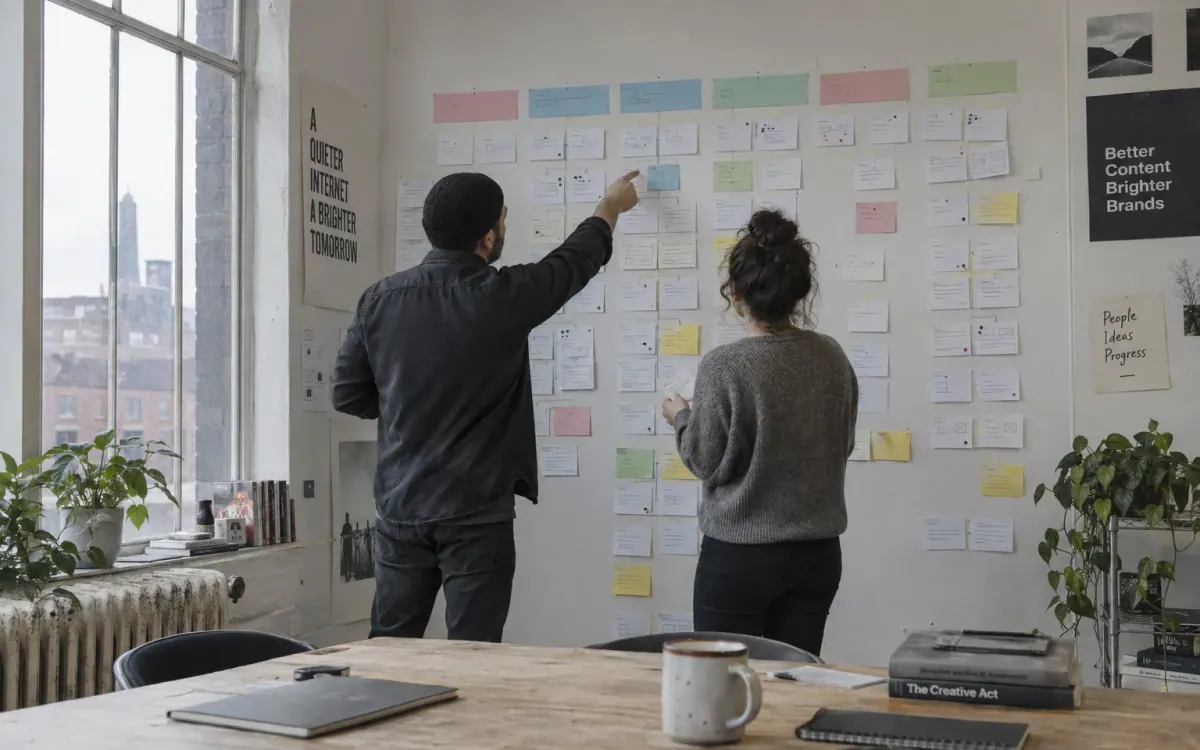
WordPress to Next.js Migration Cost in 2026: Scope and Tiers
Price a WordPress to Next.js migration from URLs, templates, content, plugins, data, integrations, SEO, accessibility, acceptance, cutover and support.
Read the guide ↗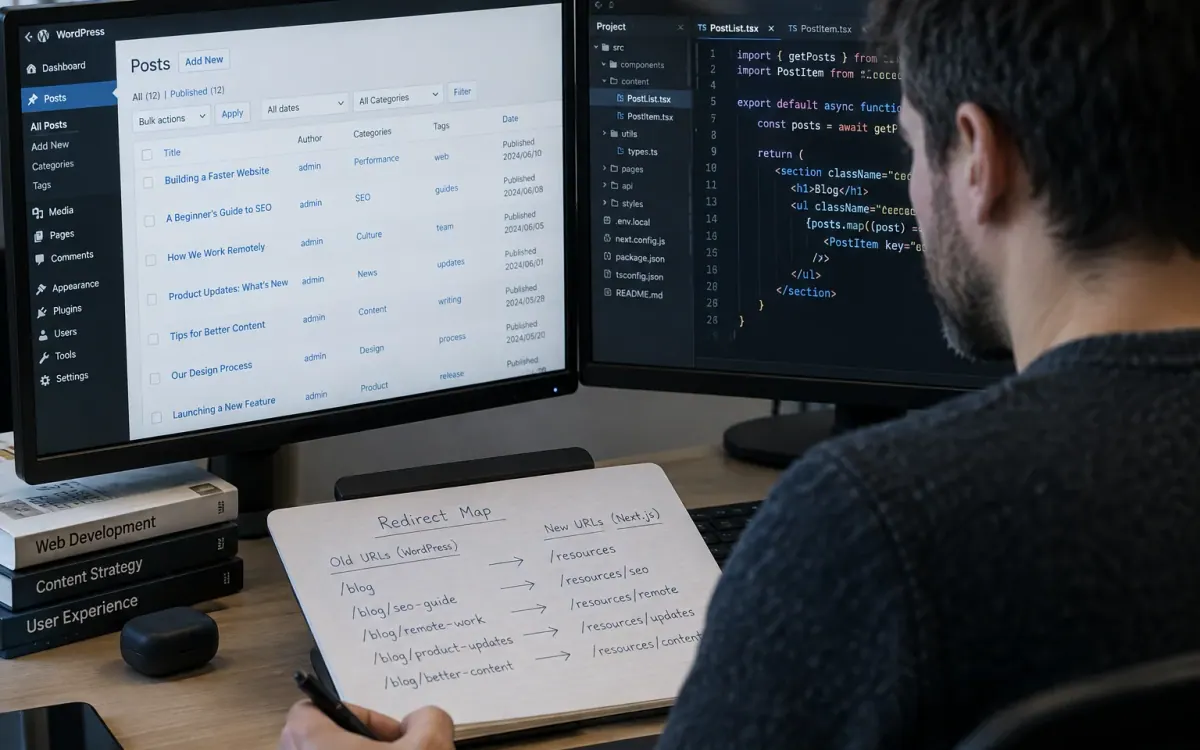
WordPress to Next.js Migration: Protecting SEO (2026)
A WordPress to Next.js migration guide covering content export, URL inventory, 301 redirect mapping, SEO preservation, staged QA, Google Search Console monitoring, and a controlled cutover.
Read the guide ↗
WordPress vs Next.js in 2026: Requirements, Cost and Migration
Compare WordPress and Next.js across architecture, editing, performance, SEO, security, integrations, total cost, ownership and migration risk without universal score claims.
Read the guide ↗
Why We Choose Next.js for Some WordPress Migrations in 2026
Why PandaCodeGen uses Next.js for selected migrations, where WordPress remains a sensible fit, and how performance, editing, security, ownership and SEO are accepted without universal claims.
Read the guide ↗
Next.js and Sanity in 2026: Fit, Cost and Tradeoffs
A current guide to Next.js with Sanity: rendering and content roles, editorial workflows, localization, pricing, security boundaries and when to use a simpler stack.
Read the guide ↗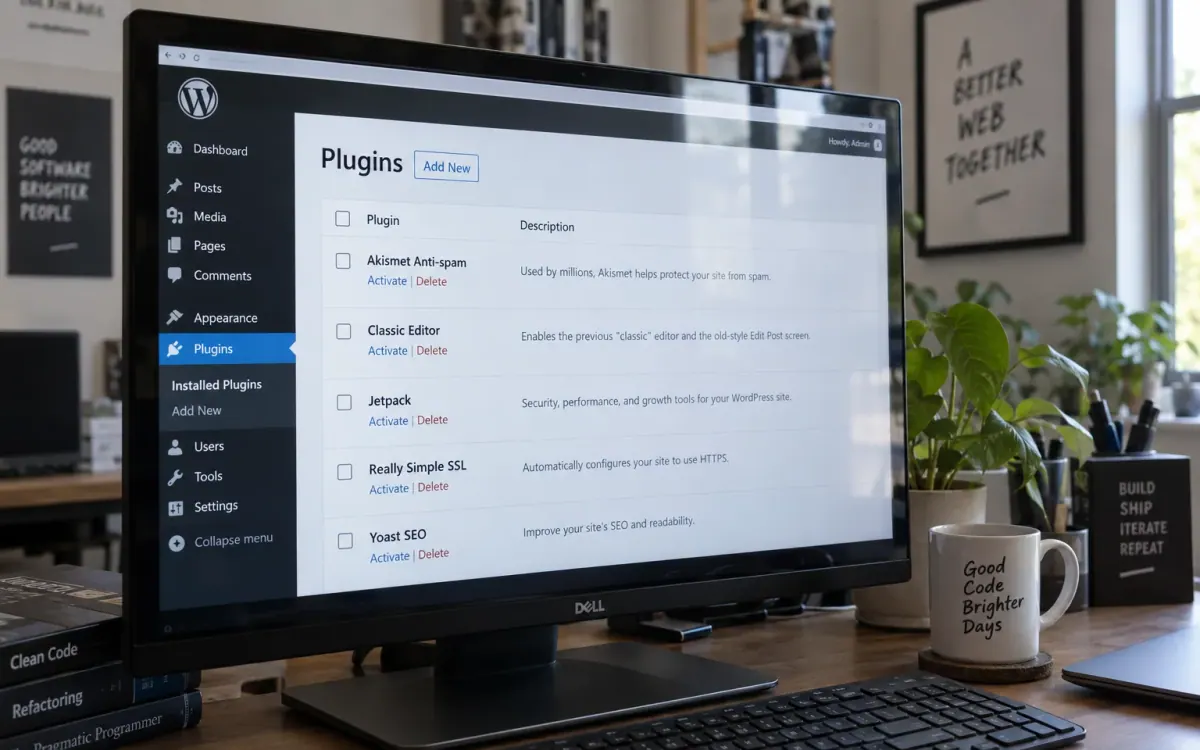
WordPress in April 2026: Three Security and Product Records
A source-led review of the Smart Slider 3 Pro and EssentialPlugin supply-chain incidents plus a WooCommerce core team lead's public feedback thread and their limits.
Read the guide ↗
CMS Market Share 2015 to 2026: WordPress Peaked in 2022
Twelve years of measured CMS market share. WordPress peaked at 65.2% in 2022 and is at 58.6% in the October 2026 reading, self-hosted platforms lost 13.3 points while hosted builders gained 12.9, and Webflow has not moved in three readings.
Read the guide ↗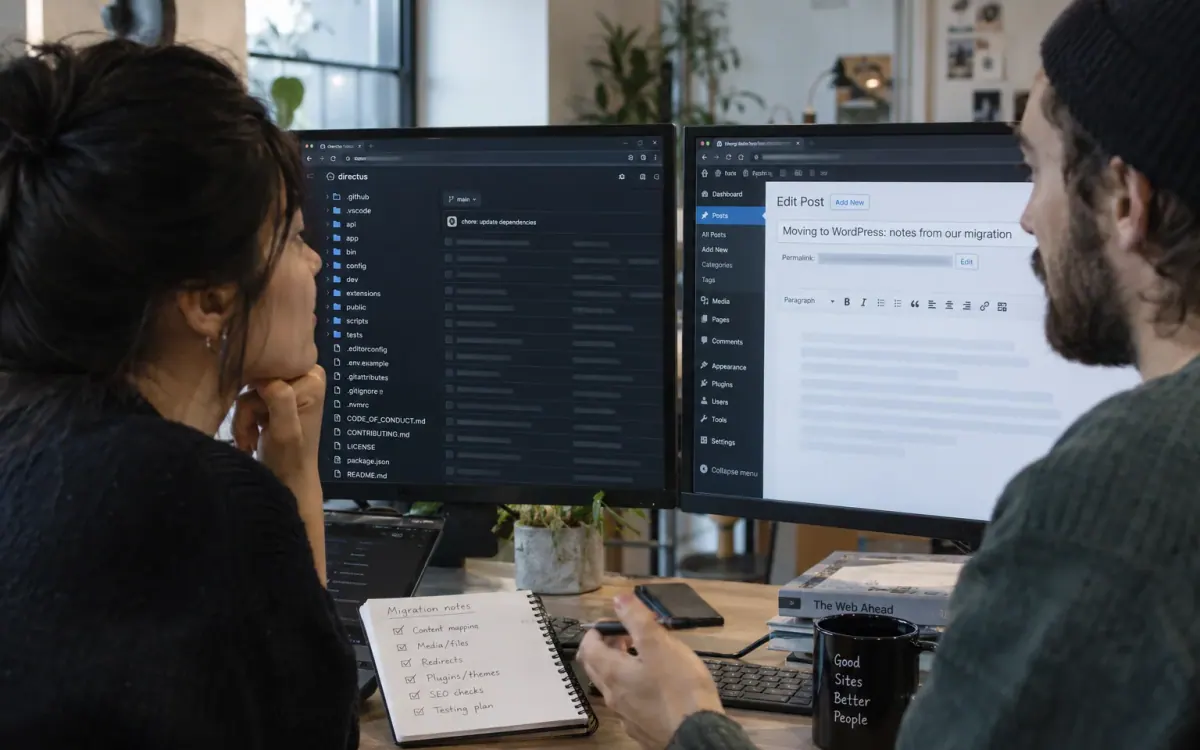
Cloudflare EmDash vs WordPress: 2026 Readiness Guide
Cloudflare calls EmDash the spiritual successor to WordPress, and it reached 1.0 in September 2026. What changed, how the plugin sandbox and registry work, why it is not a Next.js CMS, and the migration risks.
Read the guide ↗
WordPress vs Custom Code: A 3-Year Cost Model for 2026
Compare WordPress and custom code with editable inputs for build, migration, providers, software, labor, maintenance, incidents, roadmap and exit.
Read the guide ↗
WordPress AI Plugin Security in 2026: AI Engine Advisory Guide
A dated, evidence-led guide to AI Engine and WordPress MCP advisories, affected configurations, patching, token rotation, permissions, privacy, logging and incident response.
Read the guide ↗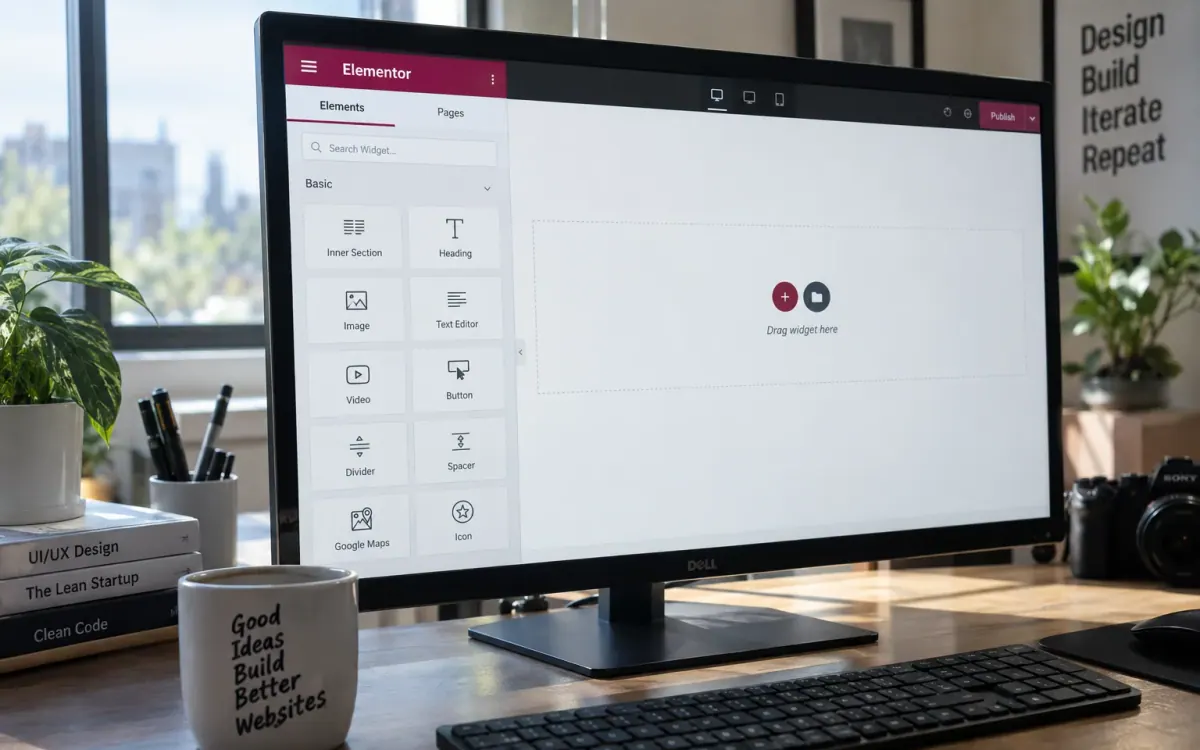
Does Elementor Hurt SEO? A 2026 Evidence Guide
Test rendering, Core Web Vitals, DOM, assets, plugins, content, and Search Console evidence before optimizing or migrating.
Read the guide ↗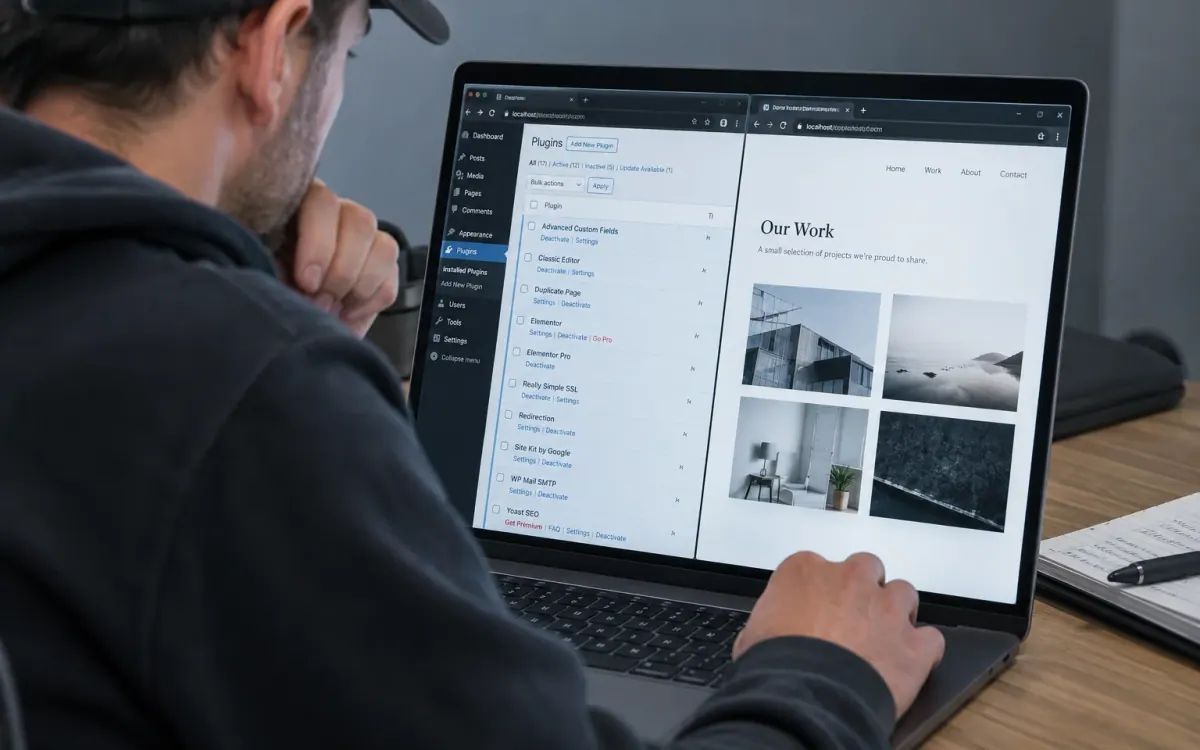
Do WordPress Plugins Slow Your Site? A 2026 Audit Guide
Audit plugins by measured frontend, server, database, background and third-party impact. Fix the responsible work instead of treating plugin count as a speed score.
Read the guide ↗
WordPress Traffic Drop in 2026: Speed, SEO, Tracking or Demand?
Diagnose a WordPress traffic drop across measurement, technical changes, search demand, Google updates, content, competition and page experience before choosing a fix.
Read the guide ↗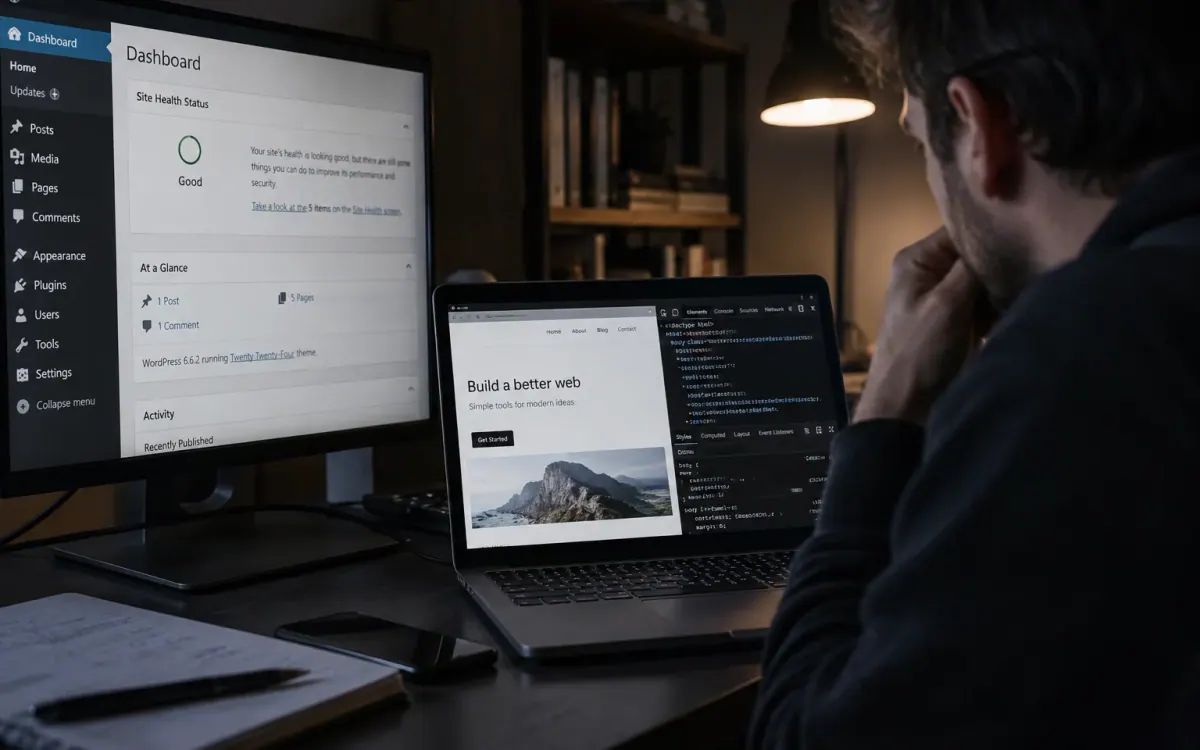
How to Fix a Slow WordPress Site: 8 Evidence-Led Methods
Profile slow routes, isolate server, cache, database, theme, plugin, media and third-party work, then decide whether migration is justified.
Read the guide ↗
Divi Theme Slow? A 2026 Diagnostic and Fix Guide
Diagnose a slow Divi site, test Divi 5 and in-place fixes, and decide whether to optimize, rebuild in WordPress, or migrate.
Read the guide ↗Want to understand how we check claims and maintain these guides?
Read our editorial policy →