PandaCodeGen / Medical website design & development
Medical website design. For practices and medical training providers.
Medical website design and development for practices, clinics and medical training providers. We build on Next.js with a Sanity editor your staff can update, and add a Supabase database and logins when you need classes, students or bookings managed behind the site. The pages, editing and price are agreed in writing first.
01 / See the work
A medical training system on this stack.
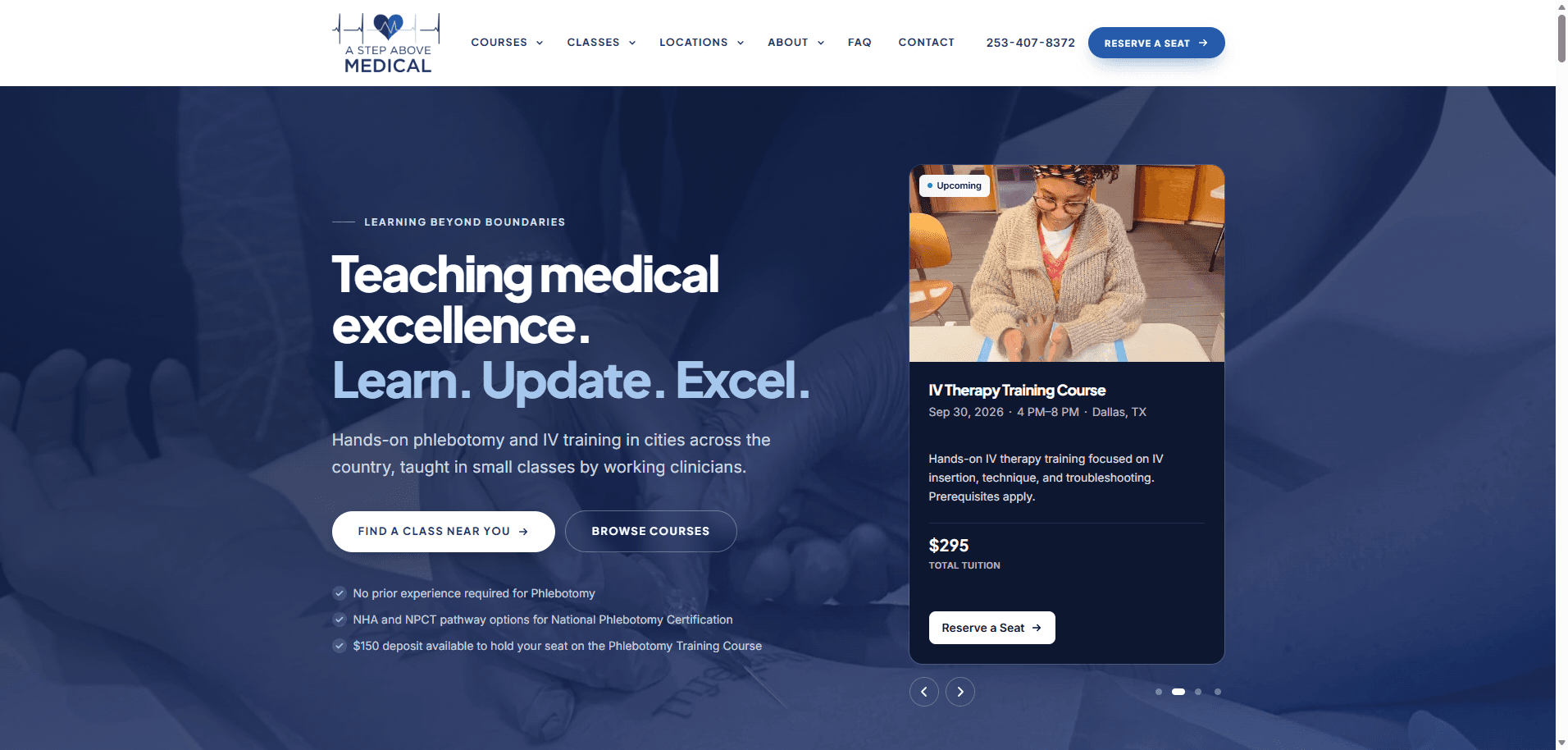
A Step Above Medical teaches medical courses. We rebuilt their WordPress website with Next.js and Sanity, and built a team portal on Supabase for classes, students, payments and certificates.
Project / A Step Above Medical
A complete medical training management system: a public course website, a content editor and a separate team portal for classes, students, payments and certificates. The website was rebuilt from WordPress with Next.js and Sanity; the portal uses Supabase. The project is live.
Independent client project, now live. Screenshots were captured before launch and illustrate the website and portal; no live-site performance or business results are claimed.
Project / Medical practice demo
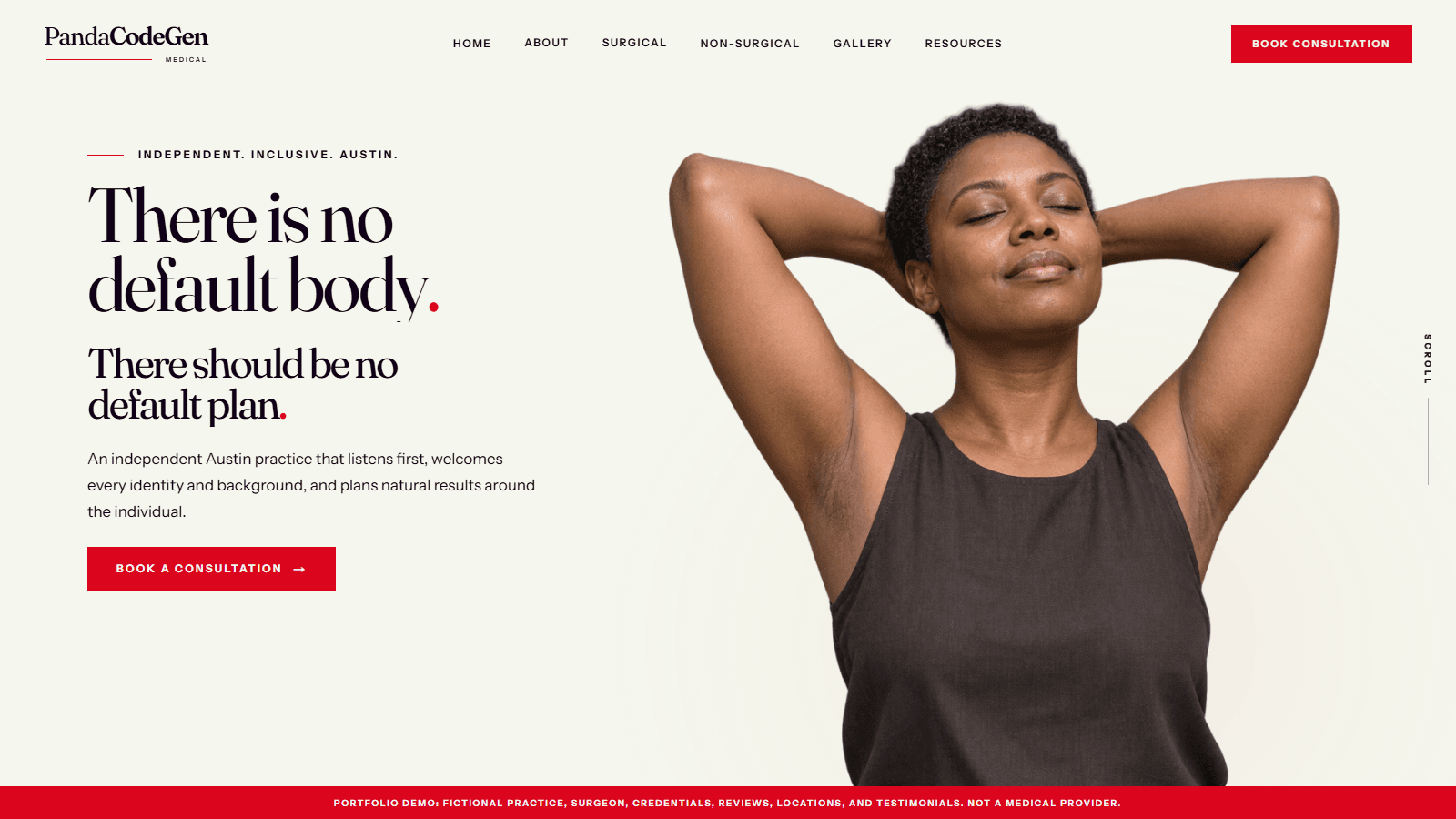
A practice website demo with treatment pages, care steps and a consultation journey.
Portfolio demo. Every name, treatment and detail is invented; it is not a real practice.
02 / Review your site
What should your website do for patients and staff?
Start with the decisions a visitor makes: which treatment or course fits, how to book or enquire, and who they will see. Then decide what your staff update themselves.
Services and treatments
Plan a clear page for each treatment, service or course, with the questions people ask before they book.
Enquiries and booking
Decide how people book or enquire: a form, a phone call or your existing booking system. We test the agreed route from the website to your inbox or system.
Staff editing
Choose which text, staff profiles, locations and schedules your team edits in Sanity. We demonstrate those tasks before handover.
Patient information
Tell us what the site may collect. Forms ask only for what the agreed workflow needs. If the site must collect or store protected health information, we scope it as a HIPAA project: providers that sign a Business Associate Agreement (BAA), health information kept out of the content editor, and a BAA between you and us.
What the proposal resolves
The stack behind a medical website.
Our usual stack is Next.js on Vercel, Sanity for content, and Supabase when the site needs a database and logins. The proposal names each account and what it costs to run.
Website on Next.js and Vercel
Pages for treatments, courses, locations and staff, hosted on Vercel Pro. On our maintenance or SEO package, hosting on our account is included if you want it; otherwise the site runs in a Vercel account in your name.
Editor on Sanity
Your team updates services, staff, locations and announcements in Sanity Studio. Every build that uses Sanity includes training on Sanity Studio and written documentation.
Database and logins on Supabase
When you need classes, students, payments or staff records behind the website, we build them on Supabase in an account in your name. A Step Above Medical's team portal works this way.
Moving from WordPress
Existing pages, posts and images are inventoried, moved and redirected so their addresses keep working. A Step Above Medical's website was rebuilt from WordPress.
03 / Make the right call
Improve your site or build a new one.
We recommend the scope that addresses the evidence from your site and team, then put the work and boundaries in writing.
Keep your current website
If your WordPress or builder site mostly works, we fix the pages, forms or editing problems first.
A custom medical website
Next.js and Sanity, plus Supabase when you need logins or records, scoped around your services, staff and booking route.
04 / From call to handover
Build, test
and hand over.
Each stage creates something you can review. Your proposal names the deliverables and the point where you accept them.
Talk to the founders
Tell Hassan or Imran about your practice or courses, the pages you need and how people book today.
Agree pages, editing and price
Confirm treatments or courses, staff editing, forms, any portal and running costs in a written quote.
Review a private preview
Check the pages and editing tasks on a private link, with your team, before anything goes live.
Launch with a walkthrough
Check the agreed pages, forms and redirects, then get access, written instructions and a live demo.
05 / Published starting point
From $1,500
Starting point, not an instant quote.
Medical website design cost.
Custom websites start at $1,500 (Starter), $3,500 (Growth) and $5,000 (Scale). A portal with logins, classes or payments is priced after the workflow is reviewed. The accepted written proposal sets the final price and dates.
Pages, editor, forms and connections listed in the quote.
Domain and database in your name; hosting as agreed in the proposal.
Written instructions and a live walkthrough of the editing tasks.
After launch
What the stack costs to run.
The build is a one-off. These are the bills that continue, so add them up before you compare quotes.
Hosting
Vercel Pro, $20 a monthContent editor
Sanity Free, $0 a month for most small teamsDatabase and logins, only if you need them
Supabase Pro, from $25 a monthDomain
Paid yearly to your registrar, in your namePublished prices as of October 2026. On our maintenance or SEO package, hosting is included if you want it.
06 / Ownership & exports
What do you keep after the project?
You receive the files we create for your project, written instructions and control of the production accounts. Your proposal sets out the delivery and any third-party terms.
Your project handover
You receive the project code and design files we create for you, plus documentation and control of the production accounts. If you then take a monthly support or care plan, that doesn't change: we keep sharing the code, documentation and accounts with you, so you always have your own copy. Third-party themes, plugins, services and assets remain under their own licence terms.
Your project assets
- Code and design files
The project code and design files we create for you.
- Written instructions
Instructions handed over with the project files. If you take a care plan later, we keep sharing the documentation with you.
- Training on your editor
An editing walkthrough at handover, so your team can update the site. Every build that uses Sanity includes training on Sanity Studio and written documentation for it. On Starter, the content editor is set up, documented, and we train you on it.
- Your accounts
Control of the production accounts. Hosting moves to your own account on request or when an engagement ends.
- No required care plan
Your build keeps working without a PandaCodeGen care plan. Hosting and other provider services still need their own arrangements.
Your written proposal states the details for your project, including any third-party licences.
07 / Before you decide
Questions people ask.
These are starting answers. Project-specific details belong in the written proposal.
How much does a medical website cost?
Have you built a medical website before?
Can my staff update the website?
Can you build a HIPAA-compliant website?
What does a medical website cost to run each month?
Keep exploring
All services ↗Related service
Backend development for portals ↗